10 min read
You’ve noticed your Colorbond roof doesn’t look the way it used to. The colour seems washed out, lighter than it should be, and if you rub your hand across the surface, it comes away with a fine powdery residue. That powder is chalk - and it’s one of the most common reasons Perth homeowners call us about their metal roofs.
Chalking isn’t a defect. It’s a natural aging process that happens to every painted metal roof eventually. But understanding what’s happening, why it happens faster in Perth than most places, and when it crosses the line from cosmetic issue to genuine problem will help you make the right decision about your roof.
What Is Chalking?
Every Colorbond or factory-painted metal roof has a coating system - typically a primer and a topcoat of baked-on paint. The topcoat consists of two main components: pigment (which gives the colour) and binder (the resin that holds the pigment to the metal surface and forms a continuous protective film).
Chalking occurs when UV radiation breaks down the binder. As the resin degrades, it can no longer hold the pigment particles firmly in place. The pigment loosens and sits on the surface as a fine powder - that’s the chalk.
Think of it like this: the binder is the glue holding the colour in place. UV radiation slowly dissolves the glue, and the colour particles become loose powder on the surface.
This process is sometimes called photo-oxidation - the UV energy triggers a chemical reaction that breaks the molecular chains in the resin. It’s the same basic process that causes car paint to fade and plastic outdoor furniture to become brittle and discoloured.
Why Perth Roofs Chalk Faster
Perth has one of the highest UV indexes of any major city in the world. We regularly hit UV index 11-14 in summer (anything above 11 is classified as “extreme”), and even in winter, Perth’s UV levels are higher than summer levels in many European cities.
This relentless UV exposure accelerates the breakdown of paint binders significantly. A Colorbond roof in Perth will typically show visible chalking 5-10 years earlier than the same roof in Melbourne or a cloudy coastal location.
Other factors that accelerate chalking in Perth:
Heat. Roof surface temperatures of 60-80°C in summer speed up the chemical degradation. Heat doesn’t cause chalking directly, but it accelerates the UV-driven process.
Orientation. North and west-facing roof planes cop the most intense sun and will chalk before south and east-facing planes on the same roof. You might notice one side of your roof looks noticeably more faded than the other - that’s differential chalking caused by uneven UV exposure.
Coastal salt. If you’re within a few kilometres of the coast, airborne salt deposits on the roof surface can react with the paint system and contribute to accelerated degradation. Salt doesn’t cause chalking per se, but it can compromise the coating’s integrity and make it more vulnerable to UV breakdown.
Air quality. Industrial pollutants and airborne chemicals can attack paint films. Properties near major roads, industrial areas, or the Kwinana strip may see slightly accelerated coating degradation.
The Timeline: When to Expect Chalking
For a standard Colorbond roof in Perth with typical exposure:
- 0-10 years: Colour generally holds well. Minor fading may be noticeable if compared directly to a new sample, but the roof still looks good from the street.
- 10-15 years: Early chalking begins. The colour appears lighter and less vibrant. Running your hand across the surface leaves a faint powdery residue.
- 15-20 years: Moderate chalking. The colour change is obvious, especially on north and west faces. The chalky residue is clearly visible.
- 20-30 years: Advanced chalking. The roof may look significantly different from its original colour. Darker colours may appear almost pastel. The coating is thin and the primer or bare metal may be visible in patches.
These timelines can shift significantly based on the factors mentioned above. A north-facing, dark-coloured roof near the coast might show advanced chalking at 15 years. A light-coloured roof in a sheltered inland location might look presentable for 25 years.
Which Colours Fade and Chalk Fastest?
Not all colours are equal when it comes to UV resistance:
Darker colours fade fastest. Blacks, charcoals, dark greys, and deep greens absorb more solar energy (both visible light and UV), which generates more heat and more UV-driven degradation at the paint surface. A dark roof runs hotter, and that heat accelerates the breakdown.
Reds, blues, and bright colours are moderately susceptible. The organic pigments used in these colours are inherently less UV-stable than inorganic pigments.
Lighter colours fade slowest. Whites, creams, light greys, and pale colours reflect more UV and run cooler. The inorganic pigments used in these colours (titanium dioxide in whites, for example) are inherently more UV-stable.
Earth tones (sandstone, paperbark, dune, jasper) tend to hold their colour well because they use stable iron oxide pigments.
This is why you’ll sometimes see a roof that’s charcoal on the north face and still looks decent on the south - the north-facing plane gets hammered by UV while the south face is relatively protected.
Normal Aging vs. Premature Failure
There’s an important difference between a roof that’s chalking naturally after 15-20 years and one that’s failing prematurely. Here’s how to tell:
Normal Aging
- Gradual, even fading across each roof plane
- Chalking consistent with the roof’s age and exposure
- No bare metal or primer visible
- Coating still adhered to the metal (the chalk wipes off, but there’s solid paint underneath)
- Fading matches the pattern you’d expect (north and west worse than south and east)
Premature Failure
- Chalking or peeling within the first 10 years
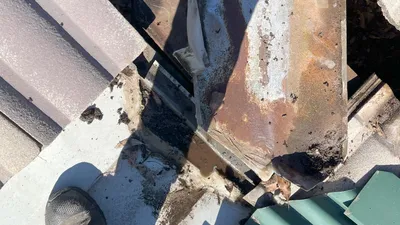
- Patchy areas where coating has completely failed
- Bare metal or primer visible
- Coating lifting or flaking off in sheets
- Blistering or bubbling
- Rust appearing under or around failed coating areas
If your roof is showing signs of premature failure, it could be due to a manufacturing defect in the coating, improper storage or handling of the sheets before installation, or environmental damage (chemical exposure, for example). Check your Colorbond warranty - BlueScope offers warranties ranging from 15 to 36 years depending on the product and environment, and premature failure may be covered.
When Should You Repaint?
Timing matters. Repaint too early and you’re spending money unnecessarily. Wait too long and the coating degrades to the point where the steel underneath is compromised, turning a repainting job into a much more expensive rust repair or replacement.
The right time to repaint is when:
- The chalking is moderate to heavy and the colour is significantly different from original
- The coating is thin but still present - there’s no bare metal showing
- You can see the primer colour through the topcoat in some areas
- The roof still has good structural integrity (no rust perforation, no corroded fixings)
You’ve waited too long if:
- Bare metal is visible in patches
- Surface rust has started
- Screw holes are showing rust staining
- Sheet edges or overlaps are corroding
At that point the steel itself is compromised. A roof that’s corroding through has gone past a clean and repaint and is heading toward replacement, which is a far bigger and more expensive job than a straightforward recoat.
How Colorbond Roof Restoration Works
A professional metal roof restoration involves more than just slapping paint over chalky old coating. Done properly, the process includes:
Surface Preparation
This is the critical step that determines whether the new coating lasts or fails within a few years.
The chalky surface layer must be removed - it’s essentially loose powder, and painting over it is like painting over dust. The surface is pressure washed at high pressure to remove the chalk, dirt, mould, and any loose coating. For heavily chalked roofs, additional preparation may be needed.
The goal is to get down to a sound, firmly-adhered existing coating that the new system can bond to.
Checking the Steel Is Sound
A clean and repaint renews the protective coating, but it can only go over steel that’s still sound. Where a roof has real corrosion - rust perforation, heavily corroded sheets or fixings - it’s past a repaint and needs those sections replaced, which is a re-roofing job rather than a restoration. If we spot that on assessment, we’ll tell you rather than coat over it.
Priming
A specialist metal roof primer is applied to ensure proper adhesion between the old coating and the new topcoat. This isn’t optional - skipping the primer is the single most common reason DIY metal roof paint jobs fail within 2-3 years.
Topcoat Application
Two coats of a high-build acrylic or specialist metal roof coating are applied. Quality products include UV stabilisers and flexible resins designed to handle the thermal expansion and contraction that metal roofs go through daily.
The Dulux Acratex roof coating system we use is specifically formulated for metal roofs in harsh Australian conditions. As a Dulux Acratex Accredited Applicator - Roofing Specialist, we use their recommended system to ensure the coating performs as intended and the manufacturer’s warranty conditions are met.
Flashings and a Sound Roof
There’s no point putting a beautiful new coating on a roof that isn’t sound underneath. Flashings, valleys, and penetration points are inspected and resealed. If the fixings are failing or the steel is corroding through, that’s beyond a clean and repaint and needs sorting as its own job - a fresh coating won’t hold together a roof that’s already leaking.
Product Options for Metal Roof Recoating
Not all roof paints are created equal. Here’s what’s available:
Premium acrylic roof coatings (like the Dulux Acratex system used in our roof painting service) - purpose-built for Australian roofs, with high UV resistance, flexibility to handle thermal movement, and proven long-term durability. Expected life of a quality system properly applied: 15-20 years.
Standard exterior acrylics - cheaper, but they don’t have the flexibility, UV resistance, or film thickness of dedicated roof products. They’ll fade and chalk much faster and typically last 5-8 years on a roof.
Heat-reflective coatings - these use infrared-reflective pigments to reduce heat absorption. Worth considering if you’re choosing a medium or dark colour and want to reduce summer heat transfer. They add $500-$1,500 to the total cost.
Silicone-modified coatings - excellent water resistance and flexibility, but limited colour options and higher cost. Used more commonly on commercial and industrial roofs.
The Cost of Waiting Too Long
Here’s the practical reality: a chalking roof isn’t an emergency. You have time to plan and budget. But there’s a window of opportunity - and if you miss it, the cost goes up significantly.
- A chalked but structurally sound roof: Straightforward clean and repaint - standard pricing, full colour choice
- A roof with early surface rust: Often still a candidate for a clean and repaint while the steel is sound, but the window is closing
- A roof with significant corrosion: Past a clean and repaint - corroded sheets and fixings mean it’s heading toward replacement, not a recoat
- A roof corroded beyond saving: Full reroof cost - typically 3-5 times the cost of a clean and repaint that should have been done years earlier
The lesson: address chalking while it’s still a cosmetic issue, not a structural one.
The Bottom Line
Chalking is inevitable on every painted metal roof, and Perth’s extreme UV means it happens faster here than almost anywhere else in Australia. It’s not a crisis, but it is a signal that your roof’s protective coating is degrading and will eventually leave the steel underneath vulnerable.
If your Colorbond roof is visibly chalked and faded, the smartest move is to get it assessed while the coating is still salvageable. A professional metal roof restoration will strip the chalk and apply a new coating system that resets the clock for another 15-20 years - at a fraction of the cost of waiting until the steel is compromised.
Run your hand across the roof. If it comes back powdery, it’s time to start planning. Get a free quote online and we’ll let you know where your roof stands.
 Licensed
  Fast Response
