10 min read
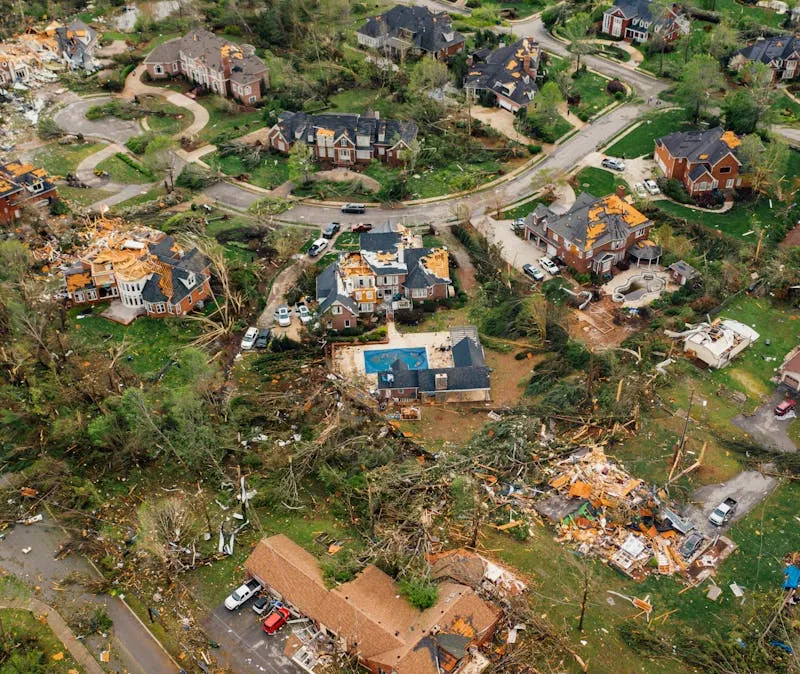
Most Perth homeowners think cyclones are a problem for the north - Karratha, Port Hedland, Broome. And while that’s where the Category 4 and 5 systems typically hit, Perth and the wider southwest are far from immune. Ex-tropical cyclones regularly push south with destructive winds, heavy rain, and enough energy to cause serious roof damage well into the metropolitan area.
The 2021 remnants of Cyclone Seroja demonstrated this clearly, causing widespread damage across the midwest and affecting areas as far south as the Perth hills. Severe storm events that originate from tropical systems reach the metro area more often than most people realise, and when they do, the roofs that weren’t prepared are the ones that suffer.
WA Cyclone Season: November to April
Western Australia’s official cyclone season runs from 1 November to 30 April, with the peak typically between January and March. During this period, the warm waters off the northwest coast generate tropical systems that can intensify rapidly.
Even when a cyclone doesn’t directly hit Perth, the remnants of these systems bring:
- Sustained high winds - gusts exceeding 100 km/h are not uncommon with ex-tropical systems
- Intense rainfall - short, heavy downpours that overwhelm drainage and expose every weakness in your roof’s waterproofing
- Wind-driven rain - rain pushed horizontally under tiles, through gaps in pointing, and into any opening that wouldn’t normally admit water
- Flying debris - branches, loose building materials, and anything not tied down becomes a projectile
The combination of wind and rain is what makes these events so damaging to roofs. A roof that handles a normal Perth winter storm perfectly well can fail dramatically when wind speeds increase and rain comes from unusual angles.
Pre-Season Roof Checklist
The time to prepare is before the season starts - ideally in October or early November. Once a cyclone warning is issued, it’s too late to get a roofer out, and getting on the roof yourself during high winds is extremely dangerous.
Inspect and Secure Loose Tiles
Walk around your property and look up at the roof from ground level. Use binoculars if you have them. You’re looking for:
- Tiles that have shifted out of alignment - visible as uneven lines across the roof
- Lifted or displaced tiles - often caused by previous wind events, possum activity, or deteriorated bedding
- Cracked or broken tiles - any tile that’s compromised is a weak point where wind can get under and lift surrounding tiles
A single loose tile can be the starting point for catastrophic damage during high winds. Wind gets under the lifted tile, creates uplift on the surrounding tiles, and the problem cascades. We’ve seen roofs lose entire sections of tiles starting from one loose tile that wasn’t addressed.
Check Your Pointing and Bedding
Ridge caps (the tiles along the top ridge and hips of your roof) are held in place by bedding mortar and sealed with flexible pointing compound. Over time, bedding cracks and pointing deteriorates, especially in Perth’s harsh UV and thermal cycling conditions.
If your pointing is cracked, peeling, or missing in sections, those ridge caps are vulnerable to wind lift. Ridge caps that come off during a storm leave a massive opening along the top of your roof - the worst possible place for water ingress.
Have deteriorated pointing replaced before cyclone season. This is a standard maintenance task that makes a significant difference to your roof’s wind resistance.
Clear Gutters and Downpipes
Blocked gutters cause two problems during severe storms. First, water overflows and can penetrate under the eave line and into the roof cavity. Second, the weight of water-logged debris in gutters adds stress to fascia boards and gutter brackets that may already be weakened.
Clear all leaves, debris, and silt from gutters and flush downpipes to ensure they’re flowing freely. Check that downpipe connections to stormwater drains are intact and not blocked at ground level.
Trim Overhanging Trees
This is one of the most effective things you can do. Overhanging branches become battering rams in high winds, smashing tiles and puncturing metal roofing. Even branches that don’t directly contact the roof can break off and land on it with enough force to cause serious damage.
Cut back any branches that overhang or come within two metres of the roof. Pay particular attention to large eucalyptus trees - they shed heavy limbs without warning, and the WA species are notorious for it.
Secure Roof-Mounted Equipment
Check the fixings on anything mounted to your roof:
- Solar panels - ensure mounting brackets are secure, no panels are lifting, and rails are firmly attached to the roof structure
- TV antennas and satellite dishes - old antennas with rusted brackets are a common casualty in storms and can damage tiles when they come loose
- Evaporative air conditioning units - check the unit is bolted down securely and the ductwork connections to the roof are sealed
- Whirlybirds and ventilators - ensure they’re not loose or corroded at the base
Any of these items coming loose in high winds creates a projectile hazard and leaves an opening in the roof surface.
Check Eave Linings and Soffits
Eave linings (the panels under the eaves) are often overlooked. Damaged, loose, or missing sections allow wind to enter the roof cavity. Once wind gets inside the cavity, it creates internal pressure that pushes upward on the roof structure - this is how roofs get lifted off.
Walk around the perimeter of your home and look up at the eaves. Any gaps, loose panels, or damaged sections need repair before storm season.
Cyclone-Rated Tie-Down Requirements
WA’s building standards specify wind regions across the state. Perth falls within Wind Region A (non-cyclonic), but areas further north - from Geraldton upward - fall within cyclonic wind regions (B, C, and D).
If your home is in a cyclonic wind region, the building standards require specific roof tie-down systems:
- Roof tiles must be mechanically fixed (wire-tied or clipped) to battens, not just relying on their own weight
- Battens must be strapped to rafters or trusses with approved cyclone ties
- Roof structure must be tied down to wall frames with engineered connections
- Wall frames must be bolted to the slab or foundations
In Perth’s non-cyclonic region, many older homes have tiles that simply sit on battens held in place by gravity and a few nails. This works fine in normal conditions but leaves the roof more vulnerable during severe wind events. If you’re in an older Perth home, it’s worth having a roofer check whether your tiles are mechanically fixed - particularly if you’ve experienced tile displacement during past storms.
For homes in cyclonic regions, tie-down systems should be inspected regularly. Corrosion of straps and brackets in coastal areas is a genuine concern, and a tie-down system that’s corroded through provides no protection at all.
What to Do During a Cyclone Warning
When the Bureau of Meteorology issues a cyclone warning that may affect your area:
Blue Alert (Be Aware)
A cyclone may affect you. This is the time to finalise preparations:
- Move vehicles under cover if possible
- Secure or bring inside loose outdoor items - furniture, trampolines, shade sails, bins
- Fill bathtubs and containers with water in case supply is disrupted
- Charge phones and torches
- Know where your emergency kit is
Yellow Alert (Take Action)
A cyclone is expected to affect you. You should be finishing preparations:
- Close and lock all windows and external doors
- If you have window shutters, close them
- Stay well away from the roof - do not attempt last-minute repairs
- Turn off gas at the mains
- Keep monitoring emergency broadcasts on ABC radio or the Emergency WA website
Red Alert (Take Shelter)
The cyclone is imminent. Take shelter immediately:
- Stay inside in the strongest part of the building - usually a hallway or bathroom away from windows
- If you hear the roof failing, shelter under a sturdy table
- Do not go outside until authorities confirm the all-clear - the calm eye of a cyclone passes and then the winds return from the opposite direction
Assessing Damage After the Event
Once the all-clear is given, assess your roof from the ground. Do not get on the roof - there may be structural damage that makes it unsafe.
From the ground, look for:
- Missing tiles or metal sheets - obvious gaps in the roof surface
- Displaced ridge capping - ridge caps sitting at angles or missing entirely
- Damage from fallen trees or debris - branches on the roof, impact damage visible
- Sagging sections - indicating structural damage to battens or trusses
- Water stains or active leaks inside - check ceilings in every room, especially around penetrations (vents, exhaust fans, skylights)
If you see any damage, cover affected areas with tarpaulins if it can be done safely from a ladder (not from on the roof) and call a licensed roofer. After major storm events, roofers are in high demand, so call early and be prepared for a wait.
Take photographs of all visible damage from the ground for your insurance claim before any temporary repairs are made.
Insurance Considerations
Most home and contents insurance policies in WA cover storm and cyclone damage. However, there are important details:
Maintenance exclusions - insurers commonly deny claims where the damage resulted from lack of maintenance rather than the storm itself. If your pointing was already failing, tiles were already cracked, or gutters were blocked, the insurer may argue the storm simply exposed pre-existing neglect.
This is the strongest argument for pre-season maintenance. A well-maintained roof that suffers storm damage is a clear insurance claim. A neglected roof that fails during a storm gives the insurer an argument to deny or reduce the claim.
Document the condition - if you’re having pre-season maintenance done, keep invoices and photographs. They prove the roof was in good condition before the event and support your claim.
Temporary repairs - most policies expect you to take reasonable steps to prevent further damage (like tarping). Keep receipts for any emergency materials or services.
Excess amounts - storm events often trigger higher excess amounts on policies. Check your PDS (Product Disclosure Statement) so you know what your out-of-pocket costs will be before you need to claim.
Building standards compliance - when repairing storm damage, the work must meet current building standards. This can sometimes mean upgrades beyond simple like-for-like replacement, particularly in cyclonic regions where standards have been updated since the home was built.
Building Standards for WA Wind Regions
The Australian Standard AS 4055 classifies wind regions and specifies design requirements for residential construction. WA has a unique spread of wind regions due to its massive coastline and exposure to tropical cyclones:
- Region A (non-cyclonic) - Perth, southwest WA, inland areas south of Geraldton
- Region B (cyclonic) - Geraldton and surrounding areas
- Region C (cyclonic) - coastal areas around Broome and the northern Kimberley
- Region D (severe cyclonic) - the Pilbara and Gascoyne coast, including Carnarvon, Exmouth, Karratha and Port Hedland. The Town of Port Hedland describes itself as “one of the most severe cyclonic wind regions in Australia, being Region D” - structures there are engineered for winds well over 240 km/h
Within each region, the terrain category and shielding from surrounding buildings or vegetation further refine the design wind speed. A home on an exposed hilltop in Region A may experience higher wind loads than a sheltered home in the same region.
If you’re unsure about your home’s wind rating, your local council’s building department can advise, or a structural engineer can assess the existing tie-down and bracing systems.
The Bottom Line
Cyclone preparation isn’t just for the Pilbara. Perth and the wider southwest experience severe wind events that test roofs, and the homes that come through them best are the ones that were maintained and prepared before the season started.
The pre-season checklist isn’t complicated - secure loose tiles, check pointing, clear gutters, trim trees, and make sure everything mounted to the roof is fastened properly. These are the same maintenance tasks that keep your roof in good condition year-round. Doing them before November simply ensures your roof is at its strongest when it needs to be.
If your roof hasn’t been inspected in a while, or you know there are issues that need addressing, get them sorted before cyclone season arrives. It’s cheaper to fix a few cracked tiles with a roof repair and repoint some ridge caps in October than it is to deal with the aftermath of a storm event in February. Get a free quote online and we’ll get your roof ready for the season.


 Licensed
  Fast Response
