5 min read
If you’ve had a quote for roof restoration or ridge cap repointing in Perth, you’ve probably seen “flexible pointing” mentioned. But what actually is it, how does it compare to traditional cement pointing, and is it worth the difference?
What Is Ridge Cap Pointing?
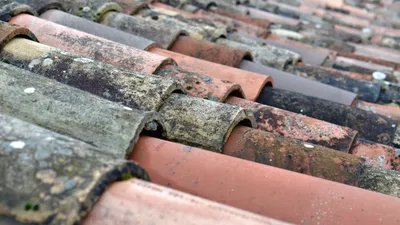
Ridge caps are the tiles or caps that sit along the peak (ridge) of your roof, covering the gap where two roof planes meet. They’re held in place by a bed of mortar or cement (bedding), and the visible joint between the cap and the roof tile is sealed with pointing - a smooth bead of material that keeps water, dust, and pests out.
Over time, this pointing cracks and falls out, leaving gaps that let water in and allow ridge caps to become loose.
Traditional Cement Pointing
For decades, ridge caps were pointed with a sand-and-cement mix - the same basic material used for bricklaying mortar. It’s cheap, widely available, and sets hard.
The Problem
Cement is rigid. Your roof is not.
Every day, your roof tiles expand in the Perth sun and contract at night. Over a year, the temperature range can be from near-freezing in the hills to 70°C+ on the tile surface in summer. This constant thermal movement creates stress at every joint - and rigid cement can’t flex with it.
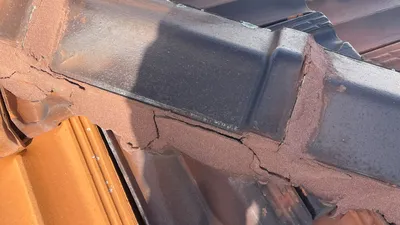
The result: cracking. It might take 5 years, it might take 15, but cement pointing always cracks eventually. Once it cracks, water gets in, and the deterioration accelerates. You’ll see:
- Hairline cracks along the pointing line
- Chunks of pointing falling onto the ground or into gutters
- Ridge caps becoming loose and shifting in the wind
- Water stains on ceilings below the ridge line
Flexible Pointing Compound
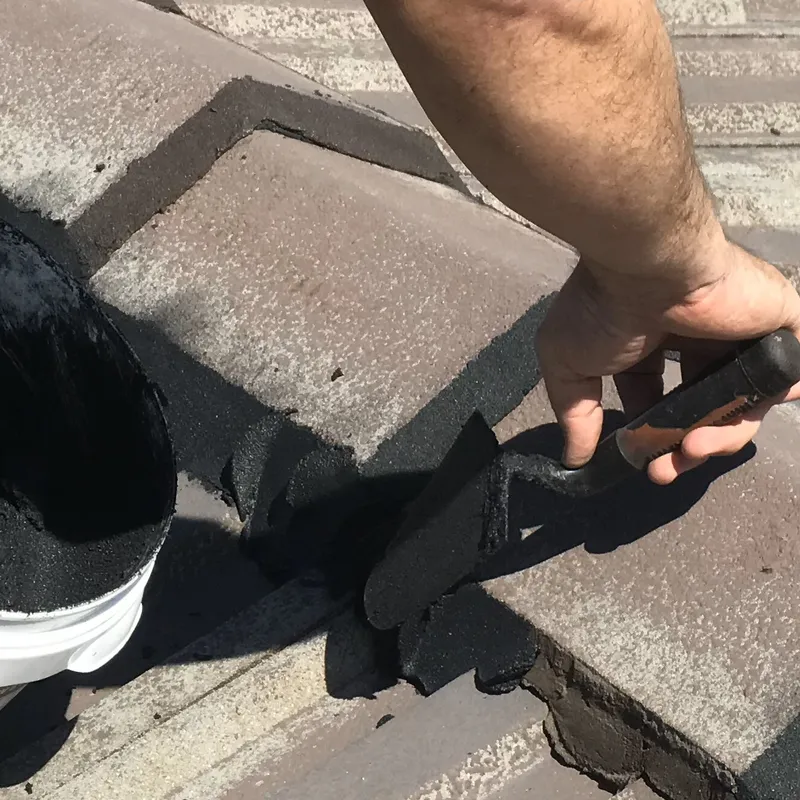
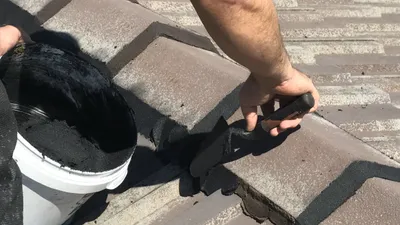
Modern flexible pointing (sometimes called “flexipoint”) is a polymer-modified compound specifically designed for roof applications. Unlike rigid cement, it stays flexible after curing - it can stretch and compress with the roof’s thermal movement without cracking.
How It’s Different
| Cement Pointing | Flexible Pointing | |
|---|---|---|
| Flexibility | None - rigid once set | Stays flexible for the life of the pointing |
| Lifespan | 5-15 years before cracking | 15-25+ years |
| Adhesion | Moderate - relies on mechanical grip | Excellent - chemical bond to tiles |
| Water resistance | Absorbs water over time | Waterproof |
| Thermal tolerance | Cracks under thermal movement | Expands and contracts with the roof |
| Colour | Grey/white, stains over time | Colour-matched, stays cleaner |
| Application | Trowel-applied | Gun-applied (neater, faster) |
Why It Lasts Longer
The flexible compound maintains a seal even as tiles expand and contract. Instead of fighting the movement (and losing, like cement does), it moves with the roof. This means:
- No cracking from thermal cycling
- The seal stays water-resistant for years, rather than cracking open like rigid mortar
- Ridge caps stay firmly secured
- Less maintenance and fewer callouts over the roof’s life
The Cost Difference
Flexible pointing typically costs 10-20% more than cement pointing for the same job. On a typical Perth home with 30-40 metres of ridge line, that’s roughly $200-$400 extra.
Given that flexible pointing lasts 2-3 times longer than cement, the per-year cost is actually cheaper. You’re paying slightly more once instead of paying for repointing every 10-15 years.
What About the Bedding?
Pointing is the visible seal on top. Bedding is the mortar base underneath that the ridge cap sits on. Bedding can be:
- Traditional mortar - sand and cement. Works fine for bedding because the ridge cap sits on top of it, and the flexible pointing above handles the thermal movement
- Flexible bedding - some systems use flexible compound for both bedding and pointing, which provides even more movement tolerance
In most Perth restorations we re-point with flexible compound over the existing bedding, which is what a restoration covers. Where the bed itself has failed, rebedding is a separate job we quote on its own - the rigid bed gives the structural support, the flexible point gives the long-term seal.
Can You Flex-Point Over Existing Cement?
No - not properly. If the existing cement pointing is cracked or deteriorated, it needs to be removed before new pointing is applied. Applying flexible compound over cracked cement just covers the problem temporarily. The old cement will continue to crumble underneath, and the new pointing will eventually lose adhesion.
The correct process:
- Remove all old, failed pointing
- Check the bedding - loose caps need rebedding, which is quoted separately from the restoration
- Apply flexible pointing compound to clean, prepared joints
- Allow to cure (typically 24 hours)
What We Use
We exclusively use flexible pointing compound for all our roof restorations. The products we use are:
- UV-stable - won’t break down in Perth’s intense sun
- Colour-matched - available in colours to match or complement the roof paint
- Stays flexible - rated for the thermal range experienced on Australian roofs
- Sheds water - it stays sealed against wind-driven rain where rigid mortar cracks and lets it through.
We haven’t used cement pointing in years. The performance difference is so significant that we wouldn’t put our name on a job that uses it.
The Bottom Line
If someone quotes you for cement pointing on a Perth roof in 2026, they’re using technology from the 1970s. Flexible pointing costs marginally more, lasts dramatically longer, and actually solves the problem that cement pointing can’t, thermal movement cracking.
Every roof restoration we do includes flexible pointing as standard. It’s one of the reasons our restorations last 15+ years instead of needing repointing again in 5-10. Get a free quote online.
 Licensed
  Fast Response
