8 min read
“How long will my roof last?” is one of the most common questions we get, and the honest answer is that it depends on what your roof is made of, how well it’s been maintained, and where in Perth you live.
But there are solid ranges based on real-world experience - not manufacturer marketing - that give you a realistic expectation of how many years your roof has left.
Lifespan by Roof Type
Concrete Tiles: 40 to 60 Years
Concrete tiles are the most common roofing material in Perth, found on the majority of homes built from the 1960s through the 2000s.
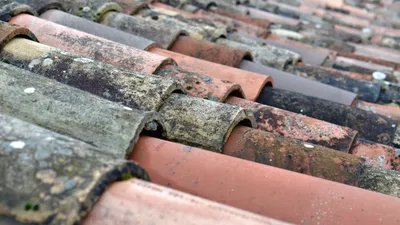
The tiles themselves are extremely durable. A well-made concrete tile can last 50-60 years with maintenance, at the top of that range. However, the protective factory coating on concrete tiles fails long before the tile does - typically after 15-25 years.
Once that coating is gone, the bare concrete absorbs water. Wet concrete tiles grow moss, become heavier (putting more stress on the structure), and deteriorate faster. This is why concrete tile roofs often need restoration around the 20-year mark - not because the tiles are failing, but because the coating is.
What actually limits the lifespan:
- Coating failure and subsequent moisture absorption
- Pointing and bedding deterioration (typically 15-25 years)
- Batten rot from moisture penetrating through failed coatings
- Tile breakage from foot traffic or impact
A concrete tile roof that gets a quality restoration at the 20-25 year mark - including recoating, repointing, and any repairs - can easily reach 50-60 years total. Without that restoration, expect problems to accelerate after year 25.
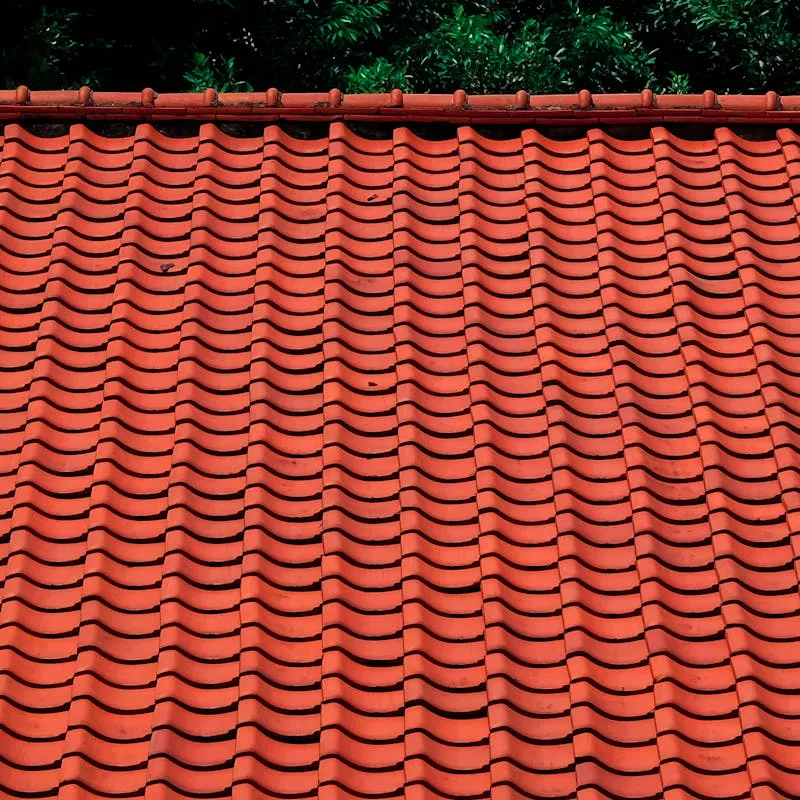
Terracotta Tiles: 75 to 100+ Years
Terracotta is the longest-lasting tile roofing material. Made from fired clay, it doesn’t absorb moisture the way concrete does, and it holds its colour and structural integrity for generations.
Many terracotta roofs installed in Perth in the 1920s-1950s are still performing well today. The tiles themselves may outlast the house.
Why terracotta lasts so long:
- Clay is naturally water-resistant - it doesn’t become porous like concrete
- Colour is fired through the tile, not applied as a surface coating
- Extremely UV-resistant
- Doesn’t support moss growth as readily as concrete
What actually limits the lifespan:
- Pointing and bedding failure (same 15-25 year issue as concrete)
- Broken tiles from impact or foot traffic (terracotta is harder but more brittle than concrete)
- Flashing deterioration around penetrations
- Batten failure - even when the tiles are perfect, the timber battens holding them can rot after 50-70 years
A terracotta roof’s biggest maintenance need is typically repointing and occasional tile replacement - the tiles themselves rarely need coating or restoration for waterproofing purposes, though some owners choose to coat them for aesthetic reasons.
Colorbond / Metal Roofing: 40 to 60 Years
Colorbond steel roofing has become increasingly popular in Perth since the 1990s. It’s lighter than tiles, handles wind well, and the factory paint finish is designed for Australian conditions.
Realistic lifespan expectations:
- Colorbond (post-2000): 40-60 years for the steel, 20-30 years before the paint finish needs attention
- Older Zincalume (unpainted): 25-40 years, depending on proximity to the coast
- Older painted metal: 20-40 years, depending on the original paint quality
What actually limits the lifespan:
- Paint fading and chalking from UV (the most common issue in Perth)
- Screw washer degradation - rubber washers harden and crack, allowing water entry at every fixing point
- Corrosion at cut edges, scratches, and areas where the coating has been damaged
- Salt air corrosion for coastal properties
- Thermal fatigue at screw holes from years of expansion and contraction
Metal roofs in Perth benefit significantly from a professional repaint once the factory coating starts chalking - usually around the 20-25 year mark. This extends the life of the steel underneath dramatically.
Perth-Specific Factors That Shorten Roof Life
Perth’s climate is harder on roofs than most Australian cities. Here’s what speeds up deterioration:
Extreme Heat and UV
Perth gets more sunshine hours than almost any other Australian capital. That means more UV radiation breaking down coatings, sealants, and pointing compounds. Roof surface temperatures regularly exceed 70 degrees in summer.
This is why a roof that might last 60 years in Melbourne might only last 45-50 in Perth without maintenance.
Thermal Cycling
The daily temperature swing in Perth - often 15-20+ degrees between overnight lows and afternoon highs - means your roof materials are constantly expanding and contracting. This repeated movement fatigues materials over time, cracking pointing, loosening fasteners, and stress-fracturing tiles.
Coastal Salt Exposure
If your home is within 5-10 kilometres of the coast (which covers a huge portion of Perth’s metro area), salt-laden air accelerates corrosion of metal components. This affects Colorbond roofing, flashing, gutters, screws, and any exposed metal on a tile roof.
Homes right on the coast - within 1-2 kilometres - see significantly faster deterioration and may need a roof repaint or restoration 5-10 years earlier than inland properties.
Maintenance Neglect
This is the single biggest factor that shortens roof life in Perth, and it’s entirely within the homeowner’s control.
A roof that never gets inspected, never has its pointing checked, never has debris cleared from valleys and gutters, and never gets minor repairs done will fail far earlier than one that receives basic maintenance every few years.
Common neglect issues that compound over time:
- Blocked valleys and gutters causing water to back up under tiles
- Failed pointing going unrepaired for years, letting water into the roof space
- Broken tiles left unrepaired, allowing moisture in
- Trees rubbing on the roof surface, damaging coatings
- Moss and lichen growth left unchecked on concrete tiles
Poor Ventilation
A poorly ventilated roof cavity traps heat, raising temperatures even higher than the exterior surface. This accelerates deterioration of everything in the roof space - timber, sarking, underside of tiles or sheets, and electrical wiring.
Perth homes with inadequate roof ventilation consistently show faster roof degradation than homes with good airflow through the cavity.
How to Assess Your Roof’s Remaining Life
Here are the signs to look for at different stages:
Early Warning Signs (Action Soon)
- Factory coating has faded significantly or feels chalky to the touch
- Some pointing cracks visible along ridge lines
- A few tiles cracked or chipped
- Minor surface moss on south-facing sections
- Gutters showing first signs of rust
At this stage, a roof restoration can extend the life by 15-20+ years.
Mid-Stage Deterioration (Action Needed)
- Large sections of pointing cracked or missing
- Multiple broken or slipped tiles
- Widespread moss and lichen growth
- Visible water stains on ceiling plaster
- Flashing sealant visibly cracked or missing
- Metal surfaces showing chalking, fading, or early rust
A restoration is still the right approach here, but the scope of work (and cost) increases. Delaying further will push you toward a full replacement.
End of Life Indicators (Major Decision)
- Tiles crumbling when handled or walked on
- Battens visible through gaps or broken tiles - and the battens look rotten
- Widespread structural sagging or unevenness in the roofline
- Persistent leaks in multiple locations despite previous repairs
- Metal sheets rusted through in multiple spots
- Roof cavity timber showing rot, mould, or termite damage
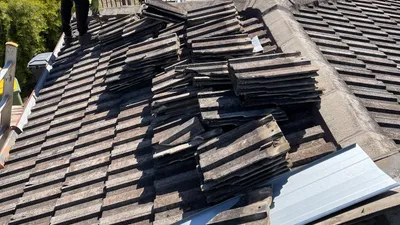
At this point, restoration may not be viable. If the substrate - the battens, sarking, and framing - has deteriorated significantly, the tiles or sheets need to come off and the structure needs repair or replacement before new roofing goes on.
Restore vs Replace: The Decision
This is the most important financial decision for Perth homeowners with aging roofs.
When Restoration Makes Sense
Restoration is the right choice when the roof structure (battens, framing, sarking) is sound and the tiles or sheets still have structural life left. A quality restoration includes:
- High-pressure cleaning to remove moss, dirt, and loose coatings
- Repointing all ridge caps with flexible compound
- Replacing broken tiles
- Repairing or replacing flashings
- Applying a new protective coating system
A full restoration typically costs 30-50% of a complete roof replacement and adds 15-20+ years of life. For most Perth homes with roofs in the 20-35 year old range, restoration is overwhelmingly the better financial decision.
When Replacement Is Necessary
Replacement becomes the better option when:
- The battens or framing need extensive repair or replacement (meaning tiles have to come off anyway)
- The tiles themselves are structurally failing - crumbling, delaminating, or too porous to coat effectively
- You want to change the roof material (tile to Colorbond, for example)
- The roof has already been restored once and is now reaching the end of that extended life
The Numbers
For a typical 200-square-metre Perth roof:
- Full restoration: $4,500 - $9,000+ (varies by scope)
- Full tile replacement: $25,000 - $45,000
- Re-roof with Colorbond: $20,000 - $40,000
A restoration at $12,000 that adds 20 years of life costs $600 per year. A replacement at $35,000 that adds 50 years costs $700 per year. Restoration almost always wins on a cost-per-year basis, provided the roof is a good candidate for it.
Making Your Roof Last Longer
Regardless of material, these practices extend roof life in Perth:
- Get an inspection every 3-5 years - catching problems early is the single most effective way to extend roof life.
- Keep gutters and valleys clear - blocked drainage forces water under tiles.
- Trim overhanging trees - branches damage roof surfaces and drop debris that traps moisture.
- Fix broken tiles promptly - one broken tile left for a winter can cause significant batten damage.
- Address pointing when it fails - don’t wait for the whole ridge line to go before repointing.
- Restore before it’s too late - a roof restored at 20-25 years will serve you better than one first addressed at 35-40 years.
The Bottom Line
Concrete tiles last 40-60 years, terracotta 75-100+, and Colorbond 40-60. But those numbers assume reasonable maintenance. In Perth’s harsh climate, a neglected roof will fail at the low end of those ranges, while a well-maintained roof will reach the high end.
The best investment most Perth homeowners can make is a professional roof inspection to understand where their roof sits on its lifespan curve. For roofs with plenty of life left, a timely roof restoration is what gets you to the high end of these ranges. If you’d like to know how much life your roof has left, get a free quote for an honest assessment.
 Licensed
  Fast Response
