
5 min read
It’s one of the most common complaints we hear from Perth homeowners: “My neighbour’s tree is dropping leaves in my gutters, branches are scraping my tiles, and now I’ve got a leak.” Tree damage to roofs is a real and expensive problem - but what are your actual rights in Western Australia?
How Trees Damage Roofs
Before we get into the legal side, here’s what overhanging trees actually do to your roof:
- Leaves and debris block gutters - causing overflow that damages fascia, eaves, and can lead to water entry
- Branches scrape tiles - wearing through protective coatings and cracking tiles with repeated contact in wind
- Falling limbs - even small branches can crack tiles or dent metal roofing
- Shade and moisture retention - areas under tree canopy stay damp longer, promoting moss, lichen, and algae growth that deteriorates tile surfaces
- Root systems - large trees near the house can shift foundations, which in turn affects the roof structure
Your Rights Under WA Law
You Can Trim to the Boundary
WA has no dedicated trees act, so this sits under common law (the right to abate a nuisance). You have the right to trim any branches that overhang your property, back to the boundary line. You don’t need your neighbour’s permission, but there are conditions:
- You must not enter your neighbour’s property to do the trimming
- You should return the cuttings to your neighbour (or offer to - in practice, most people dispose of them)
- You cannot damage the health of the tree - indiscriminate cutting that kills the tree could make you liable
- You pay for the trimming on your side
Protected Trees
Some trees in Perth are protected under local council tree preservation orders. Before cutting anything significant, check with your local council. If the tree is protected, you may need approval before trimming - even on your side of the boundary.
Significant Damage or Risk
If a neighbour’s tree has caused actual damage to your roof (cracked tiles, blocked gutters leading to leaks, structural damage from a fallen branch), you have stronger options:
- Talk to your neighbour first - most people are reasonable when they understand the problem. Show them photos of the damage.
- Write a formal letter - if talking doesn’t work, put your concerns in writing. Include photos and any repair quotes. This creates a record.
- Mediation - the WA Citizens Advice Bureau and local councils offer free or low-cost mediation services for neighbour disputes.
- Local council involvement - if the tree poses a safety risk, your council may issue a notice requiring the neighbour to act.
- Legal action - as a last resort, you can pursue the matter through the Magistrates Court. If you can prove the tree caused damage and the neighbour was aware of the risk, they may be liable for repair costs.
Who Pays for Roof Repairs?
This depends on the circumstances:
Your responsibility:
- General wear and tear from leaves and debris (this is normal maintenance)
- Trimming branches on your side of the boundary
- Keeping your own gutters clean
Potentially your neighbour’s responsibility:
- Damage from a branch that falls from their tree onto your roof
- Ongoing damage they’ve been notified about but refused to address
- Damage from a dead or obviously dangerous tree they’ve neglected
Insurance:
- Most home insurance policies cover sudden storm damage from falling trees and branches
- Gradual damage from overhanging branches is usually not covered - insurers consider this a maintenance issue
- Check your policy and document everything with photos and dates
What We See on Perth Roofs
After 500+ roof restorations across Perth, we can tell you that tree-related damage is extremely common. The suburbs with the most tree-related roof issues tend to be those with mature gardens - Kalamunda, Lesmurdie, Mount Lawley, Maylands, and the older parts of Fremantle and Melville.
Typical damage we repair:
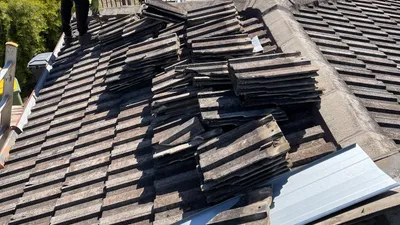
- Cracked and broken tiles from fallen branches
- Worn and abraded coating where branches rub in the wind
- Heavy moss and lichen growth under tree canopy
- Blocked valleys packed with leaves and debris
- Rusted or corroded gutters from constant moisture and organic matter
Prevention Is Cheaper Than Repair
The best approach is proactive:
- Trim overhanging branches at least once a year, before winter
- Clean gutters every 6 months if you have nearby trees (or install gutter guard)
- Inspect the roof annually for early signs of damage - cracked tiles, worn coating, moss buildup
- Talk to your neighbour early, before minor issues become major disputes
- Get a professional roof inspection if you suspect tree-related damage - we’ll document everything with photos, which is useful if you need to pursue the matter further
Need a Roof Inspection?
If you think a neighbour’s tree (or your own trees) has damaged your roof, we can assess it remotely using satellite imagery, so the assessment and quote are free, and a paid on-site roof inspection can be arranged if you would prefer one. We’ll document the damage, explain what needs fixing, and give you a clear quote. If you need evidence for an insurance claim or neighbour dispute, our inspection photos and report can help. Get a free quote to book one in.
 Licensed
  Fast Response
