7 min read
Perth has a huge stock of homes built between the 1950s and 1990s, and their roofs are reaching the age where problems start stacking up. The specific issues depend on when the home was built and what materials were used.
If your home falls into one of these eras, here’s what to expect and what to prioritise.
1950s-1960s Homes: The Asbestos Era
Many Perth homes from this period have asbestos cement roofing - commonly called “fibro” or “super six.” This was the standard roofing material before concrete tiles took over in the late 1960s.
What to Know
Asbestos roofing in good condition with an intact coating is generally low risk. The fibres are bound in the cement matrix and aren’t released into the air unless the material is broken, drilled, cut, or severely weathered.
The problem is that 60-70-year-old asbestos roofing is rarely in good condition. By this age, the cement has often deteriorated, the surface is eroding, and the sheets become brittle and fragile.
Common Issues
- Surface erosion - the cement wears away, exposing asbestos fibres on the surface
- Cracking and breakage - the sheets become brittle and crack under foot traffic or impact
- Coating failure - old paint layers peel, exposing the deteriorating surface underneath
- Fastener corrosion - the nails or screws rust, loosening sheets and creating leak points
What to Do
Asbestos roofing cannot be restored in the traditional sense - you can’t high-pressure clean it (disperses fibres) or sand it (same problem). It can be encapsulated with a specialised coating applied carefully without disturbing the surface, but this is a temporary measure.
For most homes in this era, the answer is roof replacement. Asbestos removal must be done by a licensed asbestos removalist, and the new roof (typically Colorbond) transforms the home’s appearance and performance.
We don’t remove asbestos - that’s a specialist trade - but we can assess whether encapsulation is viable or whether replacement is the better path.
1960s-1980s Homes: Early Concrete Tiles
This is the era when concrete tiles became the dominant roofing material in Perth. These homes are now 40-60 years old, and their roofs are showing their age.
Common Issues
Original mortar bedding failure. The lime-and-sand mortar used to bed ridge caps in this era has a limited lifespan. After 30-40 years, it cracks, crumbles, and lets water in. You’ll see it as missing chunks of mortar along the ridge line, displaced caps, and rust staining from the bedding nails.
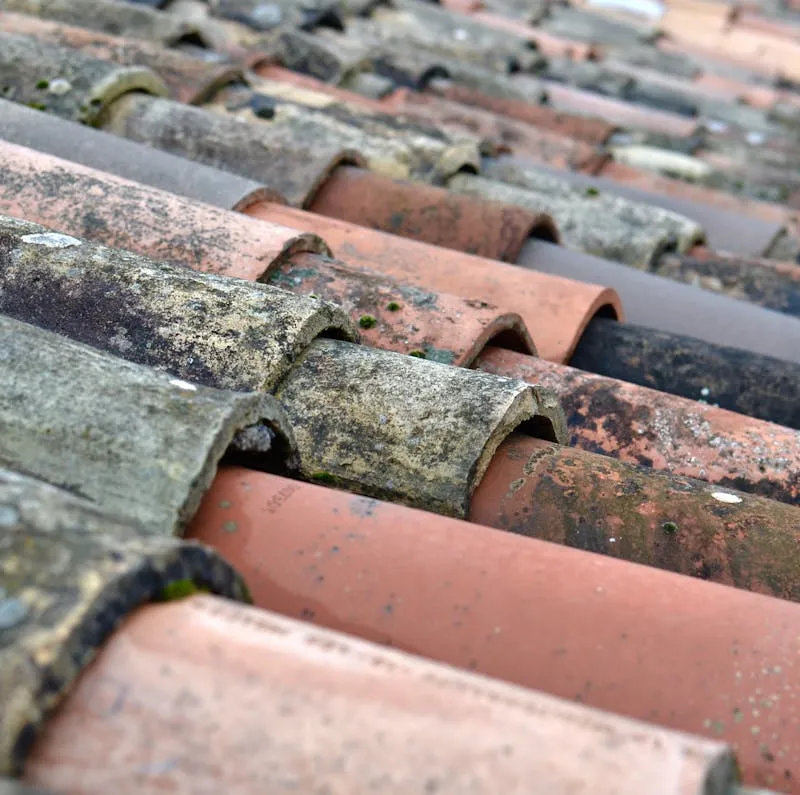
Tile surface degradation. Factory-applied colour coatings on 1960s-1980s tiles have long since worn away. The exposed concrete underneath is porous, absorbs water, and grows moss. The tiles are structurally sound but cosmetically terrible and no longer weatherproof on the surface.
Valley iron corrosion. Galvanised valley irons from this era are reaching end of life. The zinc coating is consumed, and the underlying steel is rusting. Corroded valleys are one of the most common leak sources in older Perth homes.
Broken and cracked tiles. Decades of thermal cycling - heating to 60°C+ in summer, cooling in winter - causes hairline cracks that eventually become full fractures. Individual broken tiles are replaceable if matching tiles are available.
Sarking absence. Most homes from this era were built without sarking (the membrane under the tiles). This means any tile crack, pointing failure, or wind-driven rain goes straight into the cavity and onto the ceiling.
What Restoration Involves
A full restoration on a 1960s-1980s concrete tile roof typically includes:
- High-pressure cleaning to remove all moss, lichen, and degraded surface material
- Repointing of all ridge capping with modern flexible compound (rebedding, if the caps are loose, is quoted separately)
- Valley replacement if the originals are corroded
- Broken tile replacement
- Flashing inspection and repair
- Primer/sealer followed by two coats of roof membrane
This is the most common restoration job we do in Perth, and the results are dramatic - a tired, mossy roof becomes weatherproof and looks brand new.
1980s-1990s Homes: Better Materials, Age-Related Wear
Homes from this era generally have better-quality concrete tiles and improved building practices, but they’re now 30-40 years old - the age when the first major maintenance is due.
Common Issues
Pointing deterioration. Even the improved mortar mixes from this era are starting to fail after 30+ years. Flexible pointing compound wasn’t widely used until the 2000s, so these roofs still have rigid mortar that cracks with thermal movement.
First-generation Colorbond aging. Early Colorbond (from the mid-1980s) used a different paint system than modern Colorbond. Some colours - particularly darker ones - have faded significantly, and the zinc layer is thinning.
Tile coating wear. The factory coating is fading and chalking, though not as severely as older tiles. Most 1980s-1990s tile roofs are at the stage where restoration in the next 5-10 years makes sense - addressing it now is easier and cheaper than waiting until it’s urgent.
Gutter corrosion. Original galvanised gutters from this era are reaching end of life. You’ll see rust spots, pinhole leaks, and joints separating. Colorbond gutter replacement is the standard solution.
Ventilation deficiencies. Most homes from this era were built with minimal roof ventilation - often just one or two whirlybirds for a large roof area, or none at all. Adding adequate ventilation during a restoration is a significant improvement.
What Restoration Involves
These roofs are generally in better starting condition, so restoration is often simpler:
- Clean, repair pointing, replace any broken tiles
- Address valleys and flashings as needed
- Full coating system (primer + two topcoats)
- Optional upgrades: improved ventilation, gutter replacement
What All Older Homes Have in Common
Regardless of era, older Perth homes share some universal roof challenges:
Insufficient insulation. Building standards for roof insulation have increased significantly. A home from the 1970s might have R1.5 batts (or nothing), while current standards require R3.5 or higher. Adding insulation during a roof restoration is straightforward and improves comfort and energy efficiency.
No sarking. Until the early 2000s, sarking was uncommon in Perth homes. Adding it during a reroof is possible but not during a tile restoration (the tiles aren’t removed). This is a factor in how aggressively leaks from minor tile damage present - without sarking, every crack is a direct path for water.
Outdated electrical in the cavity. Old wiring, junction boxes, and light fittings in the cavity may not meet current standards. While a roofer won’t touch electrical work, a cavity inspection during roofing work sometimes reveals issues worth having an electrician assess.
Tree encroachment. Trees that were saplings when the house was built are now large enough to overhang the roof, drop debris, and scratch surfaces. Tree management is an ongoing requirement for older properties.
When to Restore vs When to Replace
Restoration makes sense when:
- The roof structure (timbers, tiles, sheeting) is fundamentally sound
- Problems are surface-level: coating failure, pointing deterioration, individual tile damage
- The home will be lived in for 15+ more years or being prepared for sale
Replacement makes sense when:
- Asbestos roofing needs removal
- Structural damage is widespread (timber rot, major sagging)
- More than 20% of tiles are damaged and replacements aren’t available
- Metal sheeting has widespread perforation (rust-through)
- You’re already doing a major renovation and the roof is at end of life
For most older Perth homes, restoration is the right answer. The roof structure is typically sound - it’s the surface protection and mortar that have deteriorated. Restoration costs a fraction of replacement and extends the roof’s life by 15-20 years.
The Bottom Line
Older homes have character, established gardens, and locations that newer suburbs can’t match. The roof just needs some attention after decades of service. Understanding what’s normal wear for your home’s era helps you plan the right maintenance at the right time - before emergency repairs force the decision.
If your home is pre-1990s and hasn’t had roof work done, now is a good time for a professional roof inspection, and often a roof restoration to set it up for the next couple of decades. Knowing the current condition lets you budget and schedule on your terms rather than scrambling when a leak appears. Get a free quote online.
Related: Heritage and character home roof restoration in Perth

 Licensed
  Fast Response
