6 min read
Perth’s water restrictions and rising water costs have made rainwater tanks increasingly popular. New homes often include them by design, and retrofit installations are straightforward. (Water Corporation’s rainwater tank rebate is a regional offer covering eligible South West and Great Southern towns, not Perth metro.)
But your roof is the collection surface, and its condition directly affects the quality and safety of the water you’re harvesting. Here’s what you need to know.
Your Roof Is Your Catchment
Every drop of rainwater you collect has run across your roof surface, through your gutters, and down your downpipes before reaching the tank. Whatever is on those surfaces ends up in your water:
- Dust, pollen, and air pollutants
- Bird droppings and animal waste
- Moss, lichen, and organic matter
- Leaf tannins from overhanging trees
- Surface coating residue
- Rust and metal particles from corroded gutters or flashings
A clean, well-maintained roof in good condition delivers significantly cleaner water than a deteriorated one. The roof doesn’t need to be sterile - first flush diverters and tank filters handle the initial contamination - but the baseline condition matters.
Roof Coatings and Water Safety
This is the question most people have: is water collected from a painted roof safe?
Modern Roof Coatings
Current-generation roof coatings from reputable manufacturers (Dulux Acratex, Shieldcoat, etc.) are formulated to be safe for rainwater collection once fully cured. They comply with AS/NZS 4020 (Products in contact with drinking water) or equivalent standards.
Key points:
- The coating must be fully cured before collecting water (typically 28 days after final coat)
- The first few rainfalls after coating should be diverted away from the tank to flush any residual surface compounds
- Ongoing collection from a properly cured modern coating is considered safe for non-potable use (garden, toilet, laundry) and generally safe for potable use with appropriate filtration
Older or Unknown Coatings
If your roof has an older coating (pre-2000) or you don’t know what product was used, the situation is less clear. Older coatings may contain:
- Lead-based pigments (common in coatings before the 1990s)
- Fungicides or biocides that leach into runoff
- Unknown chemical compositions
If you’re collecting rainwater from an older painted roof and using it for any purpose that involves human contact, getting the water tested is sensible. Your local council or a private lab can test for heavy metals and contaminants.
Unpainted Roofs
Unpainted concrete tiles and Colorbond/Zincalume metal roofs are generally safe for rainwater collection. Metal roofs actually deliver the cleanest water because the smooth, non-porous surface sheds contaminants quickly and doesn’t support biological growth.
Unpainted concrete tiles are porous and tend to harbour more biological material (moss, lichen), which affects water quality. A clean concrete tile roof is fine; a mossy one delivers tea-coloured water with high organic content.
Gutters Matter Too
Your gutters are part of the collection system, and their condition affects water quality:
Colorbond gutters - ideal for rainwater collection. The coated surface is food-grade safe once cured, doesn’t corrode, and is easy to clean.
Old galvanised gutters - as zinc coating wears off and rust develops, iron and zinc particles enter the water. Not harmful in small quantities for garden use, but not ideal for any water that contacts skin.
Leaf-filled gutters - decomposing leaves in gutters create acidic, tannin-rich water that stains tanks and plumbing. Regular gutter cleaning is essential for rainwater quality.
First Flush Diverters
A first flush diverter is a simple device that diverts the initial flow of water from each rainfall event away from the tank. The first water off the roof carries the highest concentration of contaminants (accumulated dust, droppings, debris), so diverting it significantly improves tank water quality.
They’re inexpensive ($50-$150), easy to install on downpipes, and should be considered essential for any rainwater system.
How Roof Maintenance Affects Water Quality
Regular maintenance directly improves the water you collect:
Keep the Roof Clean
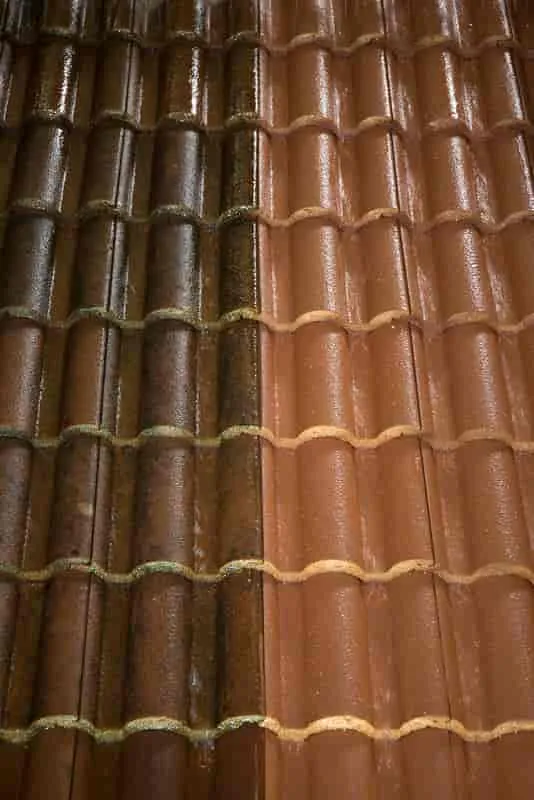
A professional roof clean every few years removes biological growth, accumulated debris, and surface contamination. This is good for the roof regardless, and it’s especially beneficial if you’re collecting rainwater.
Trim Overhanging Trees
Trees drop leaves, flowers, seeds, sap, and provide perches for birds directly above your collection surface. Trimming branches back from the roof reduces all of these contamination sources.
Maintain Gutters
Clean gutters twice a year (autumn before rain season, spring after leaf drop). Remove all debris and flush with water. Check for rust and repair or replace corroded sections. Regular gutter cleaning keeps the whole collection system flowing cleanly.
Fix Roof Issues Promptly
Cracked tiles, failed pointing, and corroded flashings don’t just cause leaks - they create areas where water pools, debris accumulates, and biological growth establishes. All of this degrades the water running off into your collection system.
Planning a Tank Installation
If you’re adding a rainwater tank, consider the roof in your planning:
Before installation:
- Assess roof condition - if a restoration is needed in the next few years, do it first
- Check coating type and age - ensure it’s safe for water collection
- Clean the roof and gutters
- Install gutter guard to reduce ongoing leaf contamination
- Install first flush diverters on all connected downpipes
Roof restoration before tank connection:
- Allow 28 days cure time after the final coat before connecting the tank
- Divert the first 2-3 rainfalls after coating away from the tank
- Then connect and begin collecting
Ongoing:
- Annual gutter clean and roof inspection
- Periodic tank inspection and cleaning (every 2-3 years)
- First flush diverter maintenance (empty and clean seasonally)
Rebates and Regulations
The WA Government’s Waterwise program has offered rebates for rainwater tank installations. Check the Water Corporation website for current rebate availability and eligibility.
Perth’s plumbing regulations require that:
- Tank installations comply with the Plumbing Code of Australia
- Tanks connected to internal plumbing (toilets, laundry) need a licensed plumber
- Tanks used for garden irrigation only can typically be owner-installed
- Backflow prevention is required for any connection to mains plumbing
The Bottom Line
A rainwater tank is a smart investment for Perth homes - it reduces water bills, provides water security during restrictions, and is good for the environment. But the quality of what you collect depends directly on the condition of your roof and gutters.
If you’re planning a tank, factor your roof condition into the equation. A clean, well-maintained roof with modern coatings, clean gutters, and first flush diversion delivers water that’s suitable for almost any household use. A neglected roof with old coatings, mossy tiles, and rusty gutters delivers water you probably don’t want to use for anything beyond the garden.
Think of it as a system: tank, pipes, gutters, and roof all working together. The weakest link determines the water quality.
If your roof is the weak link, a roof restoration brings the coating, pointing and gutters up to a standard worth collecting from. Get a free online quote and we’ll tell you honestly whether that’s what your roof needs.


 Licensed
  Fast Response
