4 min read
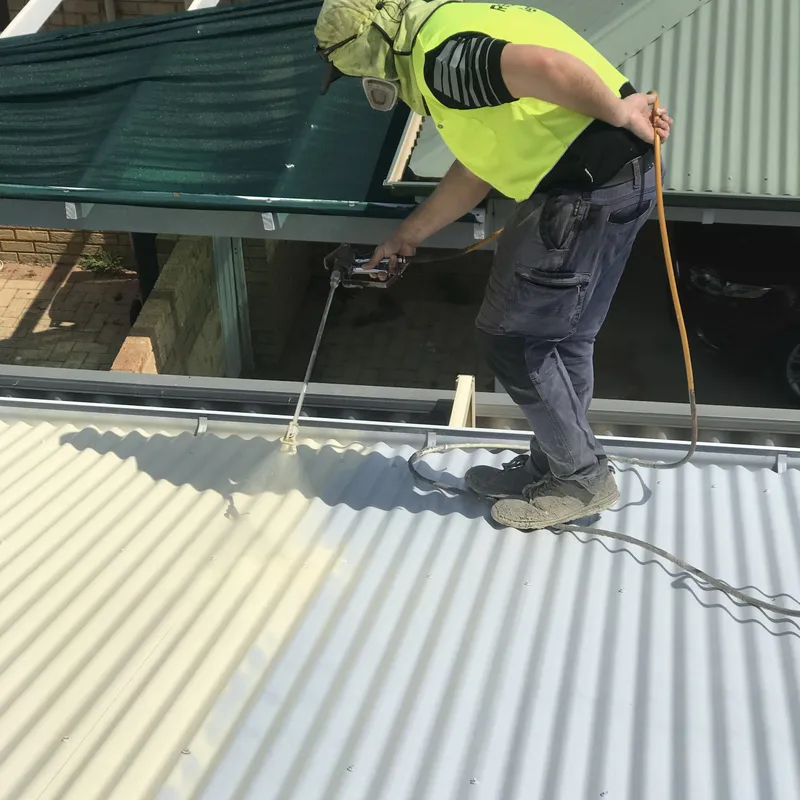
When people picture roof painting, they picture one thing: colour being sprayed on. But a proper roof coating isn’t a single coat of paint - it’s a layered system, where each layer has a different job. Understanding those layers is the easiest way to tell a quality restoration from a cheap spray-over that won’t last.
Here’s what actually goes on your roof, in order, and why it matters. (For how a full coating differs from a simple sealer, see roof painting vs sealing.)
Layer 1: The Primer / Sealer
The first coat isn’t about colour at all - it’s about adhesion. After the roof’s been cleaned back to a sound surface, a primer or sealer is applied to:
- Bind any remaining loose surface particles together
- Seal porous tiles (especially old concrete tiles whose colour coat has worn away)
- Give the colour coats a stable, consistent surface to grip
Skip this step, or skimp on it, and everything above it is building on sand. A lot of premature peeling traces straight back to a coating sprayed onto a surface that was never properly sealed.
Layer 2: The Membrane
Next comes the membrane coat - the layer that does the heavy lifting on protection. This is a thicker, flexible coat that:
- Forms a continuous, water-resistant film across the roof
- Flexes with the tiles as they expand and contract through Perth’s brutal day-night temperature swings, instead of cracking
- Builds the film thickness that actually stands up to UV and weather over years
This is the difference between a “roof coating system” and “two coats of paint.” The membrane is where the durability lives.
Layers 3 and 4: The Top Coats
Finally, the colour. A quality job applies two top coats, not one, because:
- Two coats build an even, consistent colour with no thin patches
- They add to the total film thickness protecting the roof
- They carry the UV-stable pigments that keep the colour from fading fast under Perth’s extreme sun
This is why “how many coats?” is one of the best questions you can ask a roofer. A genuine restoration is typically primer/sealer + membrane + two top coats. A cheap job is often a quick prime and a single colour coat - and it shows within a few years.
Why a System Beats a Spray-Over
The whole point of a coating system is that the layers work together: the primer grips, the membrane protects and flexes, the top coats colour and shield. Each one covers the one below. Pull out any layer to save money and you’ve weakened the whole thing.
This is exactly why a $2,000 “roof paint” and a proper roof restoration aren’t the same product. One is a single coat of colour; the other is a four-layer system engineered to last 10-15+ years. (We compare them in roof restoration vs roof painting.)
Why We Use Dulux Acratex
We apply the Dulux Acratex coating system because it’s formulated for Australian conditions - high UV, big temperature swings, salt air near the coast - and it holds colour and film integrity over time far better than a generic paint. It also comes with a genuine, manufacturer-backed 15-year warranty, which is only available because every layer of the system is applied as it’s meant to be.
We’re a Dulux Acratex Accredited Applicator, Roofing Specialist, which is the highest level of accreditation - it means the manufacturer has signed off on how we apply their system, and it’s what makes that 15-year warranty real rather than a number on a flyer. (More on the warranty in what the 15-year Dulux Acratex guarantee covers.)
How to Spot a Real Coating System in a Quote
When you’re reading quotes, look for the layers spelled out:
- Does it list a primer or sealer coat?
- Does it include a membrane coat - not just colour?
- Does it specify two top coats?
- Does it name the coating brand and warranty?
A quote that just says “clean and paint roof” is telling you very little - and often, that vagueness is the point.
The Bottom Line
A good roof coating is a system: primer to grip, membrane to protect and flex, and two top coats for colour and UV defence. The number of coats and the quality of the system are what separate a roof that looks good for 15 years from one that’s peeling in three. When you compare quotes, compare the layers - not just the price.
Want a quote that actually spells out the system? Get a free, itemised quote here.

 Licensed
  Fast Response
