6 min read
A sagging roofline is one of those problems homeowners notice with a sinking feeling - because it usually means something structural has gone wrong. The good news is that not all sag is catastrophic, and catching it early makes a significant difference to the repair cost and complexity.
What Does Roof Sag Look Like?
Stand across the street from your home and look at the ridge line (the peak of the roof). It should be straight and level. If you notice:
- A visible dip or curve in the ridge line
- One section sitting lower than another
- Waviness or unevenness along what should be a straight line
- Roof tiles that appear to have shifted or bunched up in one area
These are signs of structural movement. Minor waviness in an older home can be normal settling, but any noticeable dip or progressive change should be investigated.
From inside the house, look up at your ceilings. Sagging ceilings, new cracks, or doors that have started sticking can all indicate roof structure movement affecting the frame below.
Common Causes of Roof Sag in Perth
Undersized or Damaged Timber
Older Perth homes - particularly those built before modern engineering standards were enforced - sometimes have roof framing that was undersized for the span. Over decades, the timber slowly deflects under the constant load of tiles.
Termite damage is the other major culprit. Perth’s sandy soil is perfect termite territory, and roof timbers are a prime target. Even partial termite damage to a rafter or ridge beam can cause significant deflection because the timber’s cross-section is reduced.
Broken or Missing Roof Ties
Roof trusses and rafters rely on internal bracing, tie beams, and collar ties to maintain their shape. If these components are damaged, removed during a renovation, or were never installed correctly, the rafters can spread outward under the tile load, causing the ridge to drop.
This is surprisingly common in homes where someone has converted the roof cavity into storage or living space without proper engineering.
Overloaded Roof
Concrete roof tiles are heavy - a typical Perth tile roof weighs 50-60 kg per square metre. If the original roof was designed for lightweight materials and heavier tiles were installed later, or if multiple layers of coatings have been applied over the decades, the cumulative weight can exceed what the framing was designed to carry.
Adding solar panels, satellite dishes, or heavy rooftop equipment without checking the structure can also contribute.
Water Damage and Rot
Persistent leaks that go unrepaired cause timber to absorb moisture, leading to rot. Rotting timber loses structural integrity progressively - by the time you see sag, the damage is usually well advanced.
Perth’s combination of winter rain and summer heat creates a cycle of wetting and drying that accelerates timber decay, particularly in areas where ventilation is poor and moisture gets trapped.
Foundation Movement
Perth’s reactive clay soils (particularly in suburbs like Morley, Bayswater, and parts of the hills) can cause foundation movement that shifts the entire house frame. This can show up as roof sag even though the roof structure itself is sound - the walls have moved, changing the geometry.
How Serious Is It?
This depends entirely on the cause and the rate of change.
Monitor but don’t panic if:
- The sag is minor (barely visible) and has been stable for years
- The home is older and the sag hasn’t changed since you moved in
- A building inspection has confirmed the framing is sound
Get it assessed promptly if:
- The sag is new or has worsened recently
- You can see cracking in ceilings or walls below the sagging area
- There’s been recent termite activity or water damage
- The ridge line has a noticeable V-shape dip
- Tiles are cracking or shifting in the sagging area
Act immediately if:
- The sag is severe or progressing quickly
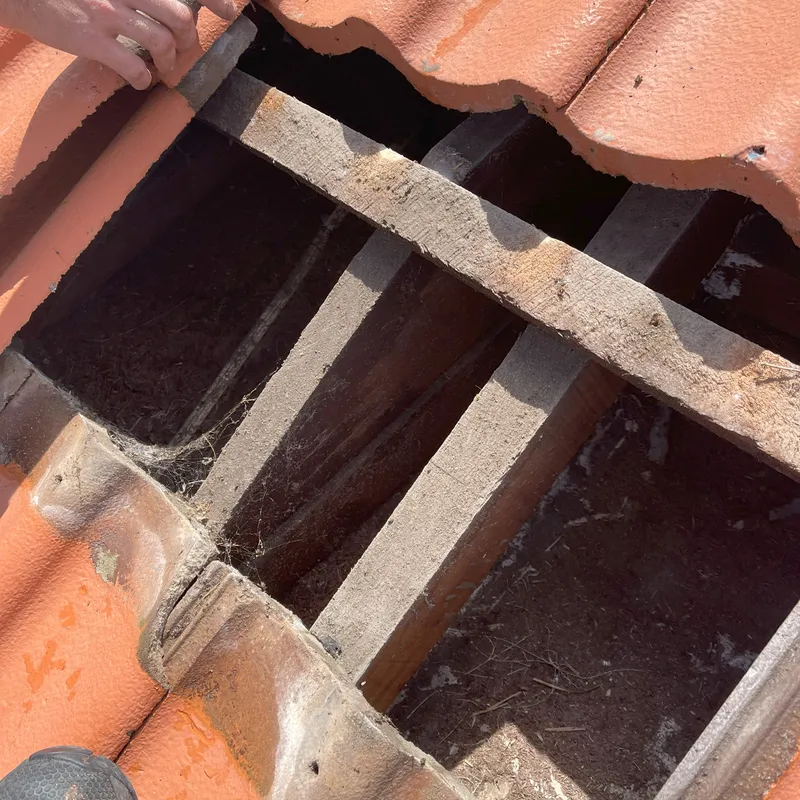
- You can see daylight through the roof structure from inside the cavity
- There’s visible timber damage, rot, or termite destruction in the cavity
- Ceiling panels are bulging or pulling away from the frame
What Can Be Done?
Professional Inspection First
A roofing or structural inspection should always be the first step. From inside the roof cavity, a professional can see the framing condition, check for termite damage, assess whether bracing is adequate, and determine whether the sag is cosmetic or structural.
This inspection is different from a standard roof surface inspection. You need someone who understands timber framing - either a structural engineer or an experienced roofing contractor who can identify when an engineer’s report is needed.
Common Repairs
Sistering rafters - bolting new timber alongside damaged rafters to restore strength without replacing the entire member.
Installing collar ties or bracing - adding the structural connections that prevent rafter spread.
Ridge beam reinforcement - supporting a sagging ridge with additional posts or a steel beam.
Replacing damaged sections - where termites or rot have destroyed timber beyond repair.
Relevelling - in extreme cases, jacking the ridge back to level before reinforcing.
What We Can Help With
During a roof inspection or restoration, we assess the overall structural condition of the roof. We can identify sag, check for obvious timber damage from the cavity, and advise whether a structural engineer should be involved.
For surface-level issues - cracked tiles over a sagging area, failed pointing along a dipped ridge, or coating damage caused by structural movement - these are things we repair as part of a restoration.
Structural timber repairs themselves typically require a builder or structural engineer, and we’ll be upfront about that if the issue goes beyond what a roofing specialist should be handling.
Prevention
- Regular termite inspections - annual inspections are essential in Perth. Don’t skip them.
- Fix leaks promptly - every wet season you ignore a leak, the timber damage gets worse
- Maintain roof ventilation - good airflow in the cavity reduces moisture buildup and timber decay
- Don’t modify roof framing - if you’re converting a roof space, get an engineer involved
- Check after storms - heavy storms can shift tiles and framing. A visual check from ground level after major weather events is good practice.
The Bottom Line
A sagging roof isn’t automatically a crisis, but it’s never something to ignore. The earlier you identify and address the cause, the simpler and cheaper the repair. Left untreated, structural issues only get worse - and what starts as a minor repair can become a major reconstruction.
If you’ve noticed a change in your roofline, the sensible first step is a professional roof inspection to understand what you’re dealing with. From there it might be a targeted repair or, in serious cases, replacement. Get a free quote online.
 Licensed
  Fast Response
